
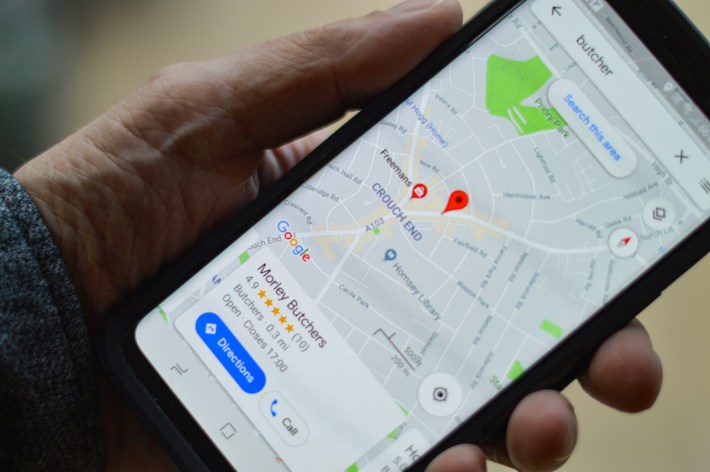
With “open now near me” searches increasing by 400% and 76% of users reporting they will visit a business within 24 hours of searching, it’s clear that local SEO has major real-world benefits to all businesses.
Local SEO is about more than boosting website traffic. It’s about connecting with nearby customers to help increase foot traffic and ultimately revenue.
But knowing where to get started can be intimidating, especially if you aren’t a website expert. That’s why I put together this local SEO checklist. It outlines all the major steps you need to take to become visible in Google searches.
Local SEO Checklist
Local SEO isn’t exactly a linear process with a clear start and stopping point. It’s actually an ongoing strategy that will need to continue indefinitely. Some steps will need to be repeated often and others won’t.
That being said, here is a basic checklist of items to tackle when rolling out a local SEO campaign:
- Claim Your Google Business Profile
- Update your citations
- Create a list of localized keywords
- Optimize your business website for local search
- Create new pages for each location (multi location only)
- Publish new content regularly
- Manage your online reputation
- Track results & improve strategy
Step 1: Claim Your Google Business Profile
Google Business Profile (GBP) is important for local SEO because it helps you gain visibility in Google Search and Google Maps results.
For example, have you ever typed “gas station near me” into Google Maps and found one that was half a mile away? You can thank Google Business Profile for that.
Google Business Profile is also good for displaying your business info, photos, and five star reviews to potential customers.
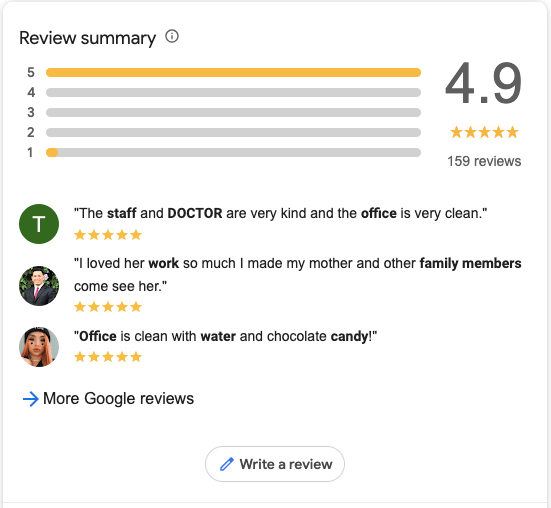
There is a lot that goes into setting up a Google Business Profile so I won’t go into all the details here, but you can read this blog post about Google Business Profile Optimization to learn more.
Basically, the steps are like this:
- Create your page
- Claim/add/verify your profile
- Choose the category that makes sense
- Upload high-quality images and add your business info
Step 2: Update Your Citations
A citation is simply any mention of your business’ name, address, and phone number (NAP) and other important information. This needs to be consistent across all your pages and listings for Google to trust your business.
Make sure the information listed on all your major citation sites is accurate. This includes Facebook, Google Business Profile, Yellow Pages, and more.
Define Your Location Strategy
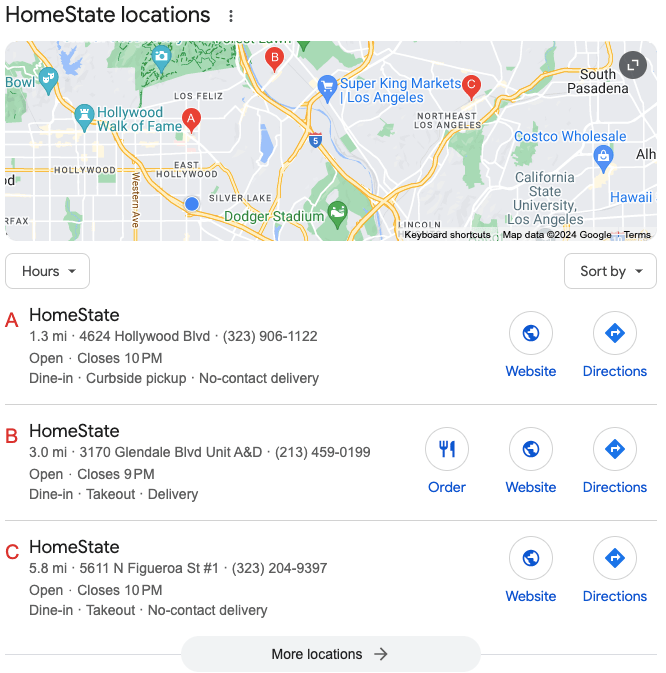
Local SEO for multi-location businesses is more complex than for single-location businesses. If your business has more than one location, you will want to follow these additional steps:
- Create individual Google Business Profile pages for each location
- Create individual pages for each location on your main website and list the contact info
Step 3: Optimize Your Website
After you have your Google Business Profile set up, you will want to make sure your main website is properly optimized for search. This means following basic SEO rules such as:
- Optimizing your pages for the appropriate keywords
- Improving the user experience
- Fixing broken pages
- Developing an internal linking strategy
- Creating high-quality content that ranks and attracts links
Then there are tactics specific to local SEO that need to be tackled such as citation management and mobile friendliness.
Perform a Technical SEO audit
Your website may have technical issues that are holding it back. This is normal, but it needs to be looked at before you do anything else.
A technical SEO audit is like an overall health check for your website. It points out things that need to be fixed and even tells you how to fix them.
There are plenty of Local SEO tools available, but Semrush is one of the best and it’s the one I use most often. The Site Audit tool will scan your entire website and display a list of errors and what steps need to be taken.
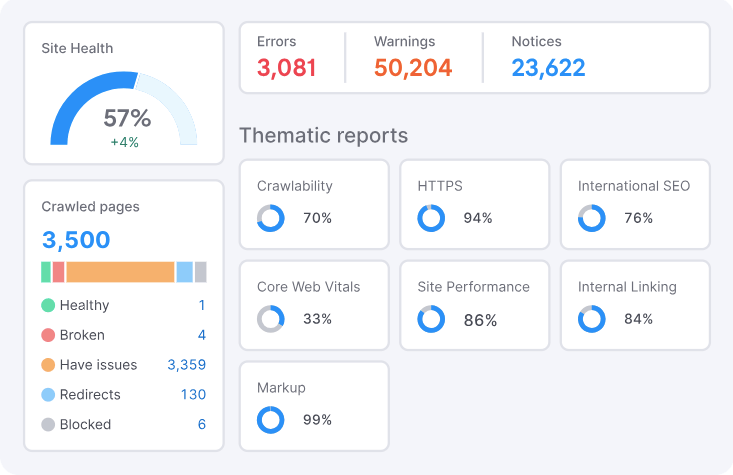
Image courtesy of Semrush
The most common issues that a technical SEO audit will uncover include:
- Broken pages
- Broken links
- Poor site structure
- Compliance issues
- Page speed issues
- Missing title tags and meta descriptions
Identify Your Target Keywords
Choosing keywords for local SEO is a little bit different from SEO for national search.
Not only do you want to choose keywords that are relevant to your business, you also want to choose keywords that people are searching for in your local area.
Some keyword tools can filter for local metrics, which helps you narrow which keywords are popular on a local level. You can narrow it down by region, state, municipality, and so on.

Image courtesy of Semrush
You can also run a competitor analysis to see what keywords similar businesses are ranking for and incorporate those terms into your strategy.
Then you’ll want to prioritize and organize your keywords by page.
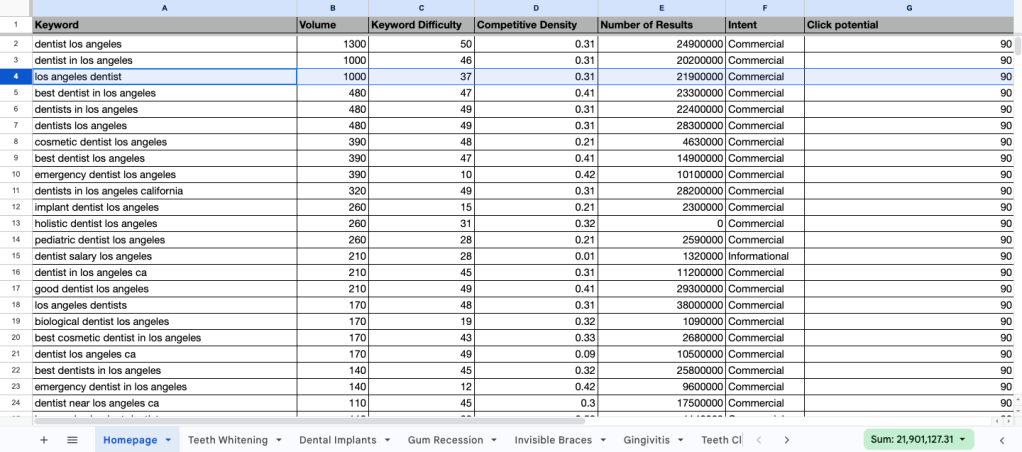
For example, if you have a page about dental implants, you will want to incorporate keywords related to dental implants. The same goes for pages about teeth whitening, invisible braces, etc.
Improve Your On-page SEO
Now that you have your keywords selected, it’s time to incorporate them into your website copy.
You’ll want to select a primary keyword — one with a high volume and low difficulty — and incorporate it into the following places:
- Main URL
- Page title
- H1 + H2
- Meta description
- Image alt text
- Sprinkled naturally throughout the body copy
Then you’ll want to select one or two secondary keywords that are synonymous with the primary keyword and incorporate those into the following places:
- Lower level subheadings like H2 + H3
- Sprinkled naturally throughout the body copy
Finally, don’t forget to optimize for mobile! With 57% percent of local searches happening on mobile devices, you don’t want to forget this piece of the puzzle.
Schema Mark Up
Schema mark up is a type of code that makes it easy for search engines to find important business details on your website.
You may need a developer to install schema mark up, but it’s a fairly simple process and your SEO partner can tell you exactly what needs to be done.
If you already have schema mark up installed, it’s still a good idea to run a test and see if the mark ups are valid. Your SEO partner will have the right tools to do this for you.
Publish New Content Regularly
Search engines love fresh content so you’ll have to keep your website updated on a regular basis.
Blogging is a great way to bring more users to your site and expand the number of keywords you rank for.
You might also want to consider adding location-specific pages for your different storefronts. For example, if you have stores in West Hollywood, Downtown, and Sherman Oaks, creating a separate page for each one can gain more visibility in local searches.

Image courtesy of John’s Automotive
Step 3: Watching Your Online Reputation
I don’t have to tell you that your online reputation can make or break your local business. Naturally, it’s important to make sure that your customers don’t see a lot of negative reviews when searching for services online.
The first thing you can do is to simply ask your happy customers to leave positive reviews. This will help to keep your rating high and push down the negative comments.
I also recommend keeping an eye on these review sites and engaging with your customers to show that you care. Make sure to thank customers for leaving exceptional reviews and respond to negative reviews with an apology or solution.
Step 4: Tracking and Improving
SEO is competitive. You’re never quite “done” with SEO so you need to make sure to track the results and make improvements along the way.
You can keep track of your visibility in Google Search and Google Maps using analytics software, such as Google Analytics or Semrush. Key metrics you will want to keep an eye on include:
- Traffic increase
- Keyword rankings
- Conversions taking place
You can build more granular reports based on what metrics are important, but this is a good place to start.
Get More Foot Traffic With Local SEO
The longer you wait to start SEO, the longer it will take to see results. If you’re ready to get more foot traffic to your business, it’s best to start your SEO campaign as soon as possible.
But doing SEO right can also be a lot of work. Partnering with an experienced SEO professional can take a lot of that work off your plate and give you peace of mind while you focus on running your business.
 SEOstateof_mind